Each day of sobriety brings an awakening!
It's fun to watch as the miracles of recovery heal the damage addiction has created!
Daily task most of us, "normies"take for granted, small signs that the addict is learning to live life on lifes terms!
One day our son called and asked his dad to cash his paycheck for him,. ( the credit union he had joined a few years back did not have a branch in the city our son was living in)
My husband said he wouldn't be able to help until the next day.
About an hour later our son called his dad back and said, "it's OK dad, I went to a bank and opened an account!
A big surprise to both of us! A sign that he is healing,
he had a problem and found a solution
WITHOUT OUR HELP!
BUT also a reminder to us that we need to give him the opportunities he needs to figure things out for himself. An awakening for him but also for us!
Other little signs
Joining a gym
Spending a day off at the beach!
Calling someone in the program when he is finding himself isolating!
Rearranging his work schedule so that he can attend his "home group" meetings
Making amends!
Spending time with family!
Sending notes of love and encouragement to loved ones!
Asking friends and family how THEY are doing!
Things we "normies" take for granted!

Sunday, August 19, 2012

Tuesday, August 7, 2012
The Kathie Lee Gifford quote
and express their disappointment with Kathie Lee Gifford’s comment in Sept 2012′s Family Circle magazine http://www.familycircle.com/teen/parenting/celebrity-parents/kathie-lee-gifford/ regarding those of us who did not do a good job parenting, thus raised a child that attend rehab.
 I hope every person that visits my blog or facebook page will go to the Family Circle facebook page, or Kathie Lee's page
 I hope every person that visits my blog or facebook page will go to the Family Circle facebook page, or Kathie Lee's page
Family Circle
Q. Got a family tradition you’d like the kids to pass down?
Kathie Lee Gifford
A. We had a sunset alert at home where we stopped everything to watch it. After I’m gone, I hope my kids and their kids will keep watching the sun go down and think of me every time.
I’m not a perfect mom, but my kids haven’t been arrested, in rehab or kicked out of school, so I must be doing something right!
Does this mean that those of us with addict children were sub par parents or did something wrong?
I am not sure if your comments will be deleted but let her know that having an addict in the family is not about poor parenting!
..Her page is found at : http://www.facebook.com/kathieleegiffordspage?ref=ts
Advocate people! Fight for your child’s right! Post intelligently without personally attacking her! Educate her fans…
peace and strength
Kathie Lee Gifford's comments in Family Circle
Dear Kathie Lee,
You have started an uproar in the addiction community my friend. Do you know how many addicts believe they came from "good homes?" Do you know how many addicts were raised by parents who instilled morals and values in their lives? Do you know how many addicts were once atheletes, honor students, valedictorians, and had plans to attend college? Do you know how many young adults from so called "good homes" become addicted to drugs each day? Do you know how many families have been shattered by addiction? Apparently not. Ms. Gifford, I am the parent of two children I love and adore. I dedicated my life to being the best mother I could be. My children were both raised in a two parent family by parents who were very present in their lives. My children were very involved in sports, dance and extracurricular activites and their father and I were always present. We both volunteered in their classrooms from the time they entered preschool. My children were taught values and morals, they attended church services weekly. They had a balance of love and discipline in their lives. If you ask my children they BOTH say, "I had the best parents."
My son became addicted to drugs at a very young age. His father and I did all that we could to stop the progression of his addiction but it has taken 10 years for him to be able to celebrate a year in recovery. My daughter is a beautiful young woman raising 4 amazing children. I am very proud of both of my children and I consider myself a "good parent" even though my son HAS been to jail, and HAS gone to rehab. You came off sounding very pompous. I believe you just don't understand the nature of addiction. It certainly is not about "good parenting".
You have started an uproar in the addiction community my friend. Do you know how many addicts believe they came from "good homes?" Do you know how many addicts were raised by parents who instilled morals and values in their lives? Do you know how many addicts were once atheletes, honor students, valedictorians, and had plans to attend college? Do you know how many young adults from so called "good homes" become addicted to drugs each day? Do you know how many families have been shattered by addiction? Apparently not. Ms. Gifford, I am the parent of two children I love and adore. I dedicated my life to being the best mother I could be. My children were both raised in a two parent family by parents who were very present in their lives. My children were very involved in sports, dance and extracurricular activites and their father and I were always present. We both volunteered in their classrooms from the time they entered preschool. My children were taught values and morals, they attended church services weekly. They had a balance of love and discipline in their lives. If you ask my children they BOTH say, "I had the best parents."
My son became addicted to drugs at a very young age. His father and I did all that we could to stop the progression of his addiction but it has taken 10 years for him to be able to celebrate a year in recovery. My daughter is a beautiful young woman raising 4 amazing children. I am very proud of both of my children and I consider myself a "good parent" even though my son HAS been to jail, and HAS gone to rehab. You came off sounding very pompous. I believe you just don't understand the nature of addiction. It certainly is not about "good parenting".
Thursday, July 26, 2012

Wednesday, July 25, 2012
When she let go of the past, her heart whispered thank you

Last night I couldn’t sleep, so I stayed up writing a blog post. Just before I crawled into bed, I thought about my son.
He’s working nights now at a rehab, and things can get pretty quiet around one or two in the morning, so I decided to send him a quick text to say goodnight.
Twenty minutes later, we were still texting.
There were lots of “ha ha’s,” and the last text he sent before we both went back to our nights simply said:
“I love you. Sleep well.”
I went to bed last night with a full heart.
It felt so good because for so many years I went to bed carrying pain, fear, and worry for my son. It has been a very long time since I truly felt his love for me in this kind of simple, healthy, connected way.
Oh, I always knew he loved me — even during the times he was out “on a run.” But addiction had such a grip on him that most of the time I only existed when he needed something.
Yesterday, completely out of the blue, he sent me something someone had posted on Instagram. It said:
“The more I grow,
the more I realize
that my mom is the best
friend I ever had.
PS, I love my mom.”
Reading it brought tears to my eyes.
Last night I fell asleep thanking God for the miracle of sobriety in my son’s life and for the 12-step program that helped me become a healthier mother.
This is not the life I once planned.
But maybe it is the life God planned for me.
Today I find myself noticing miracles in ordinary moments — a late-night conversation, laughter over text messages, and the healing that comes when love finally has room to breathe again.
Walking Through Addiction and why it's the title for my book

When I came up with the title Walking Through Addiction, I chose it for several reasons.
The first is that addiction is a journey. There is no neat beginning and end. Addiction is a disease, but it is not like most illnesses where you go to the doctor, receive treatment, and eventually become cured.
In the early days of my son’s addiction, I honestly believed that was how it would work. I thought that once we finally accepted that we could not “fix” him ourselves and became willing to turn him over to the professionals, he would go to rehab for thirty days, come home healed, and we could all move on with our lives.
Today, after nearly ten years of watching my son get sober long enough to collect six-month and nine-month chips several times — only to later find himself with a needle in his arm again — I understand something very different.
There is no cure.
There is no finish line.
There is no crowd standing on the sidelines cheering him on.
The second reason I chose the title is because living with addiction often feels like trudging through thick mud. Everything becomes heavy. Messy. Exhausting.
Sometimes your feet feel so weighed down by fear, heartbreak, and disappointment that you honestly do not think you can take another step.
As you watch someone you love sink deeper into addiction, you begin to feel defeated yourself. Your legs grow tired. Your spirit grows weary. Part of you wants to simply give up.
In my early days of recovery, I learned that I could keep moving forward one step at a time, one day at a time — and sometimes one minute at a time.
No matter how heavy the burden felt, if I just kept taking small steps, I would survive.
In the beginning, that sometimes meant forcing myself to get out of bed. Some days it meant taking a short walk or calling a friend. Other days my only goal was getting myself to a meeting.
Gradually, I began learning how to LIVE again.
It was slow, but over time I realized something important: I could get THROUGH this.
A few weeks ago, my son picked up another nine-month chip.
Some days I catch myself thinking, I’m so glad all of this is finally behind us.
In AA they describe addiction as “cunning and baffling.” Sometimes I realize my own thinking can be cunning and baffling too.
I slip back into the same old mindset I had after my son came home from his very first rehab:
Great. Now we can finally get on with our lives.
I start reassuring myself:
He completed rehab.
He lived in sober living.
He has a roommate working a strong AA program.
He attends meetings.
He has a sponsor and a home group.
He even works at a rehab.
But the truth is, I know none of those things guarantee he will still be sober tomorrow.
Other days, fear creeps back in.
The “what ifs” begin circling in my mind:
What if he stops going to meetings? What if he stops calling his sponsor? What if he loses his job?
And if I am not careful, those thoughts take me right back to my worst fear of all:
What if he goes back out there and dies this time?
Those thoughts can pull me right back into the emotional paralysis I lived in during my early days of recovery.
The truth is, this disease will never fully be “behind us.”
We will all be walking THROUGH addiction for the rest of our lives.
Recovery is built one day at a time — slowly piecing together a life of sobriety, healing, and hope.
And I will continually need to practice letting go of expectations, accepting the things I cannot change, and giving my son the dignity to live his own life.
Today I understand that my son has his own path to walk.
And our family has a path to walk too.
Each day, in our own ways, we are all trying to find our way through addiction.
Sunday, June 17, 2012

Saturday, May 5, 2012
Behind the Orange Curtain
Last week one of my classmates and I went to see the documentary "Behind The Orange Curtain" at the Newport Beach Film Festival. I first heard about this documentary when I arrived in Orange County last summer. It's a documentary about the prescription pill epidemic in Orange County. However, this problem is not exclusive to Orange County.
I have had a personal interest in this subject for a long time now since my own son's addiction to Opiates began with prescription pills that were prescribed by a doctor over 10 years ago. I have read many books about families who have been affected by addiction, I have attended 12 step support groups for families of Alcoholics or Addicts. I know first hand the pain that families go through when a loved one struggles with addiction. Attending this premiere was emotional for me. I have come to know and love some of the families who are featured in the documentary who have lost a child to a lethal overdose.
The evening started out with a candlelight vigil for the families who had lost a loved one. As I approached the theatre I saw the small gathering of mothers, fathers, brothers and sisters listening to music as silent tears fell from their cheeks. I felt somewhat of an intruder as I approached the small group of men and women who held lit candles in remembrance of their lost sons or daughters. I found myself drawn into the group, the soft music and reverence of the moment lulled me in. I quickly spotted a friend, who has fought like a warrior this past year to get the word out to young people about how dangerous these drugs are. She has put her grief aside to go to schools and tell teens her story and to relive the loss of her son every time she speaks. This night, she is a grieving mom, this night, she is here to honor her son. I went to her side and put my arms around her. I was filled with emotion. How is it that my boy is still here? How is it that my boy walked in the darkness of his Addiction for the last 10 years and survived? I am constantly reminded that the line between life and death is so incredibly thin when drugs are involved. One bad hit, one too many pills, one deadly combination of drugs and alcohol and our lives are forever altered.
Then it was time for the documentary to begin. I sat next to a handsome young man and asked what brought him out to see this movie. He mentioned that he knew my friend who gives the talks at schools, he said that he was a friend of her sons. He then went on to explain that he is addicted to Heroin and that my friend is helping him get into a rehab. The next hour and a half I watched as the forlorn faces of mothers and fathers told the story of the personal hell their family experienced the night of their child's overdose. The moment the call came that changed the course of their lives forever. My mind kept flashing between my son and the young man sitting next to me. I was reminded of my own fear everytime my son didn't come home at night and how I would jump out of my skin everytime the phone would ring. Each time I saw another parent on the screen I thought that could be me, that could be this boys mom or dad.
It was a difficult night. Many of the faces of the parents on the screen were faces that I had seen earlier in the evening at the candlelight vigil or standing in line. They don't look much different from you or me on the outside but inside there is a hole that will never be filled. Every morning they wake up to the reality that their child is gone. They will never be able to hear the sound of their childs voice again. No more "I love you's". The bedroom at the end of the hall is filled with childhood memories and an emptiness that will never be filled. The lost love of their loved one can never be replaced.
When the movie ended and the screen turned black I I turned to the boy sitting next to me and said, "please, don't give up, please keep fighting to free yourself from this deadly disease", but I know from my experience with my son, that the pleading words of a parent or loved one are barely heard through the roar of addiction that will call this young man back into the darkness if he doesn't get help soon.
 |
| CANDLELIGHT VIGIL |
 |
| BEHIND THE ORANGE CURTAIN DOCUMENTARY NEWPORT BEACH FILM FESTIVAL |
I have had a personal interest in this subject for a long time now since my own son's addiction to Opiates began with prescription pills that were prescribed by a doctor over 10 years ago. I have read many books about families who have been affected by addiction, I have attended 12 step support groups for families of Alcoholics or Addicts. I know first hand the pain that families go through when a loved one struggles with addiction. Attending this premiere was emotional for me. I have come to know and love some of the families who are featured in the documentary who have lost a child to a lethal overdose.
The evening started out with a candlelight vigil for the families who had lost a loved one. As I approached the theatre I saw the small gathering of mothers, fathers, brothers and sisters listening to music as silent tears fell from their cheeks. I felt somewhat of an intruder as I approached the small group of men and women who held lit candles in remembrance of their lost sons or daughters. I found myself drawn into the group, the soft music and reverence of the moment lulled me in. I quickly spotted a friend, who has fought like a warrior this past year to get the word out to young people about how dangerous these drugs are. She has put her grief aside to go to schools and tell teens her story and to relive the loss of her son every time she speaks. This night, she is a grieving mom, this night, she is here to honor her son. I went to her side and put my arms around her. I was filled with emotion. How is it that my boy is still here? How is it that my boy walked in the darkness of his Addiction for the last 10 years and survived? I am constantly reminded that the line between life and death is so incredibly thin when drugs are involved. One bad hit, one too many pills, one deadly combination of drugs and alcohol and our lives are forever altered.
Then it was time for the documentary to begin. I sat next to a handsome young man and asked what brought him out to see this movie. He mentioned that he knew my friend who gives the talks at schools, he said that he was a friend of her sons. He then went on to explain that he is addicted to Heroin and that my friend is helping him get into a rehab. The next hour and a half I watched as the forlorn faces of mothers and fathers told the story of the personal hell their family experienced the night of their child's overdose. The moment the call came that changed the course of their lives forever. My mind kept flashing between my son and the young man sitting next to me. I was reminded of my own fear everytime my son didn't come home at night and how I would jump out of my skin everytime the phone would ring. Each time I saw another parent on the screen I thought that could be me, that could be this boys mom or dad.
It was a difficult night. Many of the faces of the parents on the screen were faces that I had seen earlier in the evening at the candlelight vigil or standing in line. They don't look much different from you or me on the outside but inside there is a hole that will never be filled. Every morning they wake up to the reality that their child is gone. They will never be able to hear the sound of their childs voice again. No more "I love you's". The bedroom at the end of the hall is filled with childhood memories and an emptiness that will never be filled. The lost love of their loved one can never be replaced.
When the movie ended and the screen turned black I I turned to the boy sitting next to me and said, "please, don't give up, please keep fighting to free yourself from this deadly disease", but I know from my experience with my son, that the pleading words of a parent or loved one are barely heard through the roar of addiction that will call this young man back into the darkness if he doesn't get help soon.
Wednesday, April 18, 2012
Prevention and Education, Drug Overdose and The Good Samaritan Law
One of the frightening things that is happening with teenagers overdosing on prescription pills is that when a teen overdoses their friends are so afraid of getting caught with drugs or getting in trouble that they don't call 911. There are good samaritan laws being passed so that young people don't have to worry about getting in trouble if they report an overdose. New York just passed such a law.
People need to know the dangers of overdosing. When someone overdoses on an opiate it shuts down their respiratory system but this happens gradually. There is usually time to get help. One of the problems is that people do the wrong things. They leave their friend alone to "sleep it off", or they try to throw cold water on them, or yell at them. I have read about teens who have left a friend on the side of the road to die alone rather than risk getting into trouble themselves. Even adults have neglected to get medical services involved because of the fear that they themselves or their child will be prosecuted. It is crucial that the person gets immediate medical attention. In half of the cases of drug overdoses no one called 911 and a life could have been saved. Teenagers as well as parents need to be taught how to recognize an overdose and what they should do if they are in the presence of someone who overdoses.
Read more: http://healthland.time.com/2011/07/29/new-york-state-passes-good-samaritan-law-to-fight-overdose/#ixzz1sQqT7uft
People need to know the dangers of overdosing. When someone overdoses on an opiate it shuts down their respiratory system but this happens gradually. There is usually time to get help. One of the problems is that people do the wrong things. They leave their friend alone to "sleep it off", or they try to throw cold water on them, or yell at them. I have read about teens who have left a friend on the side of the road to die alone rather than risk getting into trouble themselves. Even adults have neglected to get medical services involved because of the fear that they themselves or their child will be prosecuted. It is crucial that the person gets immediate medical attention. In half of the cases of drug overdoses no one called 911 and a life could have been saved. Teenagers as well as parents need to be taught how to recognize an overdose and what they should do if they are in the presence of someone who overdoses.
Read more: http://healthland.time.com/2011/07/29/new-york-state-passes-good-samaritan-law-to-fight-overdose/#ixzz1sQqT7uft
Save A Life Cards
 My friend Jodi Barber, who woke up to find her son Jarrod barely breathing at 3 am on the living room couch had these wallet sized cards made. It was too late for Jarrod. It is sad that we have come to this but we have to do everything we can to warn teenagers about the dangers of overdosing. |
| www.onechoicecandestroy.com |

Monday, April 16, 2012
"Good Parenting" is simply not enough to keep them safe

I was thinking about the article that Natalie Costa wrote
for the Laguna Patch newspaper about the prescription drug epidemic. There is so much infomation in the article that parent's need to know about what is really going on with their teenagers. Our teenagers are in a warzone. "Good parenting" is simply not enough to keep them safe. There was a time; I have to admit, that I believed “good parenting”
would protect my children from harm. The fact is “good parenting” is simply not
enough when it comes to fighting the prescription pill epidemic.
I am enrolled in an Alcohol and Addiction Studies
Program. Recently I was in a Substance
Abuse in Adolescents class. I was a little surprised when our instructor began
a lecture on Substance abuse Prevention in Adolescents. She began by saying,
“they are finding that environmental factors are much more significant than the
genetic component.” She said the approach to prevention now is to increase the
Protective Factors in a teen’s life.
The list of
Protective Factors went something like this:
·
Supportive family relationships
·
At least one significant caring adult in the
child’s life
·
Families spend time together, mealtimes together
·
Teens need to be involved in sports and
extracurricular activities
·
Teens need to feel special, and feel empowered,
have self-acceptance
·
There should be clear parental expectations and
consequences
·
Religiosity
·
Community
My children were raised with two parents who were very
involved in their lives. Our children went to good schools where we both worked
in their classrooms and drove on field trips. Our children were involved in
sports, dance, swimming, and karate. They were taught that there was nothing
they couldn’t accomplish. We attended church together each Sunday and our
children attended youth activities and summer camp at the church. We talked to them about the
dangers of drugs, we even role played how to say “no”. That was my idea of being a “good parent”. I
guess if you look at the list above, WE DID PROVIDE PROTECTIVE FACTORS, but
that did not stop our son from taking his first hit of marijuana. My son tells us, “he had a great childhood”,
he didn’t use drugs because he was unhappy. He used because “he loved how it made him
feel”. That is the problem my friends, THAT is why so many teens are overdosing
on opiates; “they love how it feels.” Being a teenager today is challenging
they have so many stressors in their lives. They worry about fitting in, about
making the team; they worry about getting good grades and making it into
college. One hit of marijuana, one oxycontin, one opana takes those worries
away instantly.
If we are going to fight this battle we have got to see that
this is happening in good homes where protective factors are in place.
Natalie Costa said,
“During the research
for our film Behind The Orange Curtain, the main focus was the shock regarding
the number of deaths from this beautiful affluent Southern California area. We
have tree-lined streets, gated communities, Blue Ribbon schools and amazing
sports activities to keep the kids active and off the streets. What makes a good kid from a good family take
drugs in the first place never mind such high voltage pain killers that are
extremely addictive and kill”.
Many teens report they began experimenting with drugs when
they were between 12-15 years old. Experts say that teens have immature brains.
The part of the brain that is responsible for logical thinking is very
underdeveloped in a young persons brain. The area of the brain that dominates a teen’s
behavior is the one that controls impulsivity. So they have a very difficult
time making good choices because they are very impulsive. How many times have you
found yourself asking a teenager “what were you thinking?” The truth is, they
probably weren’t thinking. Research suggests that the younger a person begins
experimenting with drugs the more likely they will become addicted.
It is a deadly combination, the underdeveloped brains of teens
who desperately want to “fit in”, teens under stress, teens attending parties
where very dangerous prescription drugs are so readily available. One pill can
provide a few moments of bliss where, for a brief period they forget about all
about the stress in their lives. That one
moment they are on the top of the world. The problem is these pills are highly
addictive and eventually they are taking 8-10 pills a day just to keep from
getting sick, which can be very expensive. What we have now is an epidemic of teenagers from affluent
neighborhoods either overdosing on prescription pills, or eventually turning to
the cheaper heroin to feed their addiction.
Natalie went on to say,
“What we have come to find out, there is no
simple answer. These are good kids from good homes making bad, stupid choices
in the name of fun. They open mouth, insert pill, and the road to hell is
paved. About three out of 100 comeback from an opioid addiction and then it's a
lifelong battle. The consensus was unanimous in our interview for the film -
the feeling they got from that first pill - was a feeling they wanted to feel
the rest of their lives. Many stay addicted because the detoxification is so
painful, that it's easier to stay under the influence than to get clean”
I don’t know what the answer is. I know we are way past
“just saying no”. I know that we can have all the protective factors in place
and if our teen decides to put a pill in their mouth, as Natalie so eloquently
said, “the road to hell is paved.”
Prescription Pill Epidemic
Natalie Costa at Behind the Orange Curtain wrote an excellent article for the Laguna Patch about the presription drug epidemic that is SWEEPING OUR NATION.
 http://lagunaniguel.patch.com/blog_posts/oxycontin-opana-and-heroinall-available-in-your-backyard

Sunday, April 15, 2012
Street Drugs Book
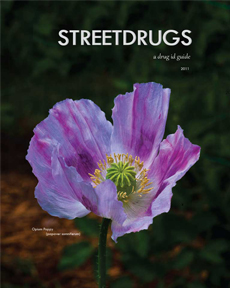
http://www.streetdrugs.org/ This website is a great resource if you want to learn what street drugs teens are using. The book STREETDRUGS is on sale right now for $2.95. A great resource.
Drug trends are in constant motion. Easy access to cocaine, heroin, marijuana, methamphetamine and other illegal drugs is well documented. In addition, the internet provides another avenue to many different kinds of drugs or chemical concoctions that provide a high, a low, hallucinogenic or other experience. Some of these internet acquired concoctions can be more dangerous than heroin or methamphetamine. Even legitimate, commercially manufactured prescription drugs are available from international markets that do not have the same restrictions or laws as the U.S. The availability of drugs and the ability of Law Enforcement Authorities to stop this threat is daunting. Our 2011 Drug ID Guide on the left shows some of the internet connections as well as some of the latest drugs available.

Drug trends are in constant motion. Easy access to cocaine, heroin, marijuana, methamphetamine and other illegal drugs is well documented. In addition, the internet provides another avenue to many different kinds of drugs or chemical concoctions that provide a high, a low, hallucinogenic or other experience. Some of these internet acquired concoctions can be more dangerous than heroin or methamphetamine. Even legitimate, commercially manufactured prescription drugs are available from international markets that do not have the same restrictions or laws as the U.S. The availability of drugs and the ability of Law Enforcement Authorities to stop this threat is daunting. Our 2011 Drug ID Guide on the left shows some of the internet connections as well as some of the latest drugs available.
April 20th AKA 420
April 20th, AKA "420" is known by teens and young adults as the biggest marijuana smoking day of the year and it is approaching. Regardless of a teens history of use, they know about this day and many experience pressure to use on this day. It's important that parents and teachers are aware of this.
The best time to offer support to young people is before the day arrives. Talk to them about their understanding of the day, experience of the day in the past, and anticipated pressures with it coming soon. There are so many myths about this day that it creates a great discussion. Offer ways to help them negotiate their way through it.
In addition, having drug testing supplies around the house helps the young person have a refusal skill when peer pressure occurs. It will occur. When they say, "my parents have a drug test and they will use it," then the peer pressure stops. The negative friends back away.
It's time to start talking to our teens about what's really going on in their lives.
Here is a link to Recovery Happens Newsletter about Marijuana http://gallery.mailchimp.com/7cd449941a71b253658f8defb/files/marijuana_2.0_pdf.1.pdf
The best time to offer support to young people is before the day arrives. Talk to them about their understanding of the day, experience of the day in the past, and anticipated pressures with it coming soon. There are so many myths about this day that it creates a great discussion. Offer ways to help them negotiate their way through it.
In addition, having drug testing supplies around the house helps the young person have a refusal skill when peer pressure occurs. It will occur. When they say, "my parents have a drug test and they will use it," then the peer pressure stops. The negative friends back away.
It's time to start talking to our teens about what's really going on in their lives.
Here is a link to Recovery Happens Newsletter about Marijuana http://gallery.mailchimp.com/7cd449941a71b253658f8defb/files/marijuana_2.0_pdf.1.pdf
DRUG TAKE BACK DAYS
HERE IS YOUR OPPORTUNITY TO DO SOMETHING
CLEAN OUT YOUR MEDICINE CABINETS, GO TO GRANDMA'S HOUSE AND CLEAN OUT HER MEDICINE CABINET. TELL YOUR FRIENDS AND RELATIVES TO SPREAD THE WORD!!
PRESCRIPTION PILL (click on TAKE BACK DAY for link to the DEA website) IS APRIL 28th!! GET RID OF YOUR EXPIRED PILLS!!! GO TO YOUR SHERIFFS STATION AND TOSS THEM!!!
CLEAN OUT YOUR MEDICINE CABINETS, GO TO GRANDMA'S HOUSE AND CLEAN OUT HER MEDICINE CABINET. TELL YOUR FRIENDS AND RELATIVES TO SPREAD THE WORD!!
PRESCRIPTION PILL (click on TAKE BACK DAY for link to the DEA website) IS APRIL 28th!! GET RID OF YOUR EXPIRED PILLS!!! GO TO YOUR SHERIFFS STATION AND TOSS THEM!!!
Saturday, April 14, 2012
Drug Awareness
DRUGS
Not MY KID, not at my HIGH SCHOOL, and certainly not IN MY NEIGHBORHOOD!!!!
When most of us grew up there was probably a group of kids at our local high school that took drugs on the weekends. They may have smoked pot or taken a hit of acid at a party now and then. In the last 30 or 40 years all that has changed; prescription drugs have infiltrated our high schools and our junior highs. The potency and availability of drugs has increased. The teens who are using drugs are no longer a small group of kids who cut classes to smoke a joint in the parking lot. Today teens are starting out by taking prescription pills, which are often opiates. These pills have a much higher potency as well as have a highly addictive component. Teenagers are much more likely to become addicted to opiates because their brains are still developing. There is no room for experimentation with todays drugs. We are no longer talking about a handful of kids who hang out in the parking lot to smoke a joint. Teens who are becoming addicted to drugs or abusing drugs today come from good homes; they have parents who have done all they could to provide a stable, loving home. The teens who are overdosing on prescription pills include kids who are involved in clubs, and sports, they are cheerleaders, and football players. This is NOT about good parenting. It's about getting involved and educating our communities.
We have to wake up people, this is going on in YOUR HIGH SCHOOL, YOUR NEIGHBORHOOD, AND THESE ARE YOUR KIDS!!!!!
Today teens attend parties where bowls full of random prescription pills are available for the taking. Party attendees bring whatever prescription pills they have and toss them into a bowl and randomly reach in and take a handful. The introduction of Oxycontin and Opana (both prescription pain medications that are highly addictive) has caused a widespread epidemic that is robbing families of their loved ones.
Anyone who has lived with addiction knows that it devastates the entire family. Once a young person becomes addicted to drugs they no longer have a choice. The craving for the drug rules their every waking moment. The need for the drug takes them to places they never could have imagined.
There is a very poignant moment in the documentary, Overtaken, when Cole says, "I like to say Addiction robbed me of my my morals and my ethics, I stole thousands and thousands of dollars from my parents, I wrecked cars, I wrecked relationships, I traumatized my family, which today, I am not comfortable with but back then I didn't care."
These young people didn't set out to be drug addicts or to have their lives ruined by the craving for a drug. There is another line in the documentary that speaks to this,
"When you can stop, you don't want to,
and, when you want to stop you can't."
As I mentioned before, teenagers have brains that are still developing, They are very impulsive as a result of this immature brain development. They don't have the ability to make rationale decisions. One choice to take a pill can alter a person's life forever.
The lives of the Rubin family will be forever altered as a result of Aaron's overdose from Oxycontin in 2005. Aaron was in a coma for 3 weeks. Sherrie stated, "we were planning his funeral". Aaron is now quadriplegic, he communicates by using his hands and fingers. Today instead of attending college as a student, Aaron and his mother give presentations at colleges about the dangers of prescription drugs.
Some teens don't survive the overdose. Jarrod Barber was one of those teenagers whose life was cut short. On January 8, 2010 Jodi Barber and her husband, Bill woke up to find Jarrod barely breathing on the sofa. A few days later they were attending his funeral. Today rather than attending her sons college graduation, or helping to plan his wedding she is advocating to shut down pill mills and educating students in junior high and high school about the dangers of prescription pills. She and Christine Brandt produced the documentary OVERTAKEN. Jodi and Christine work tirelessly to educate our community about the dangers of these drugs.
A
Not MY KID, not at my HIGH SCHOOL, and certainly not IN MY NEIGHBORHOOD!!!!
We have to wake up people, this is going on in YOUR HIGH SCHOOL, YOUR NEIGHBORHOOD, AND THESE ARE YOUR KIDS!!!!!
Today teens attend parties where bowls full of random prescription pills are available for the taking. Party attendees bring whatever prescription pills they have and toss them into a bowl and randomly reach in and take a handful. The introduction of Oxycontin and Opana (both prescription pain medications that are highly addictive) has caused a widespread epidemic that is robbing families of their loved ones.
Anyone who has lived with addiction knows that it devastates the entire family. Once a young person becomes addicted to drugs they no longer have a choice. The craving for the drug rules their every waking moment. The need for the drug takes them to places they never could have imagined.
There is a very poignant moment in the documentary, Overtaken, when Cole says, "I like to say Addiction robbed me of my my morals and my ethics, I stole thousands and thousands of dollars from my parents, I wrecked cars, I wrecked relationships, I traumatized my family, which today, I am not comfortable with but back then I didn't care."
These young people didn't set out to be drug addicts or to have their lives ruined by the craving for a drug. There is another line in the documentary that speaks to this,
"When you can stop, you don't want to,
and, when you want to stop you can't."
As I mentioned before, teenagers have brains that are still developing, They are very impulsive as a result of this immature brain development. They don't have the ability to make rationale decisions. One choice to take a pill can alter a person's life forever.
The lives of the Rubin family will be forever altered as a result of Aaron's overdose from Oxycontin in 2005. Aaron was in a coma for 3 weeks. Sherrie stated, "we were planning his funeral". Aaron is now quadriplegic, he communicates by using his hands and fingers. Today instead of attending college as a student, Aaron and his mother give presentations at colleges about the dangers of prescription drugs.
 |
| Aaron Rubin and some of my classmates at Saddleback College |
 |
| Sherrie and Aaron Rubin |
Some teens don't survive the overdose. Jarrod Barber was one of those teenagers whose life was cut short. On January 8, 2010 Jodi Barber and her husband, Bill woke up to find Jarrod barely breathing on the sofa. A few days later they were attending his funeral. Today rather than attending her sons college graduation, or helping to plan his wedding she is advocating to shut down pill mills and educating students in junior high and high school about the dangers of prescription pills. She and Christine Brandt produced the documentary OVERTAKEN. Jodi and Christine work tirelessly to educate our community about the dangers of these drugs.
 |
| Jodi Barber and Christine Brandt |
This epidemic is destroying families. Young people today should be attending high school dances and graduations not attending funerals of their classmates. This is the time for each one of US to decide what WE will we do to speak out about what is going on in our own backyards. Go to your local high school, ask what type of drug awareness program they have in their school, write your senator, clean out your own medicine cabinet, and take your old prescription pills to "drug take back days". We are way past teaching our children to "just say no". As parents and grandparents we need to learn all we can about drugs and teach our children the dangers of these highly addictive drugs.
 |
| The Barber family |


Subscribe to:
Posts (Atom)